
Sorting By Sound: New Pathways For Material Recovery
Written by Thomas Lansing, Head of Product
“To be recycled, plastics have to be sorted. It may not be the most glamorous aspect of the supply chain, but its role is crucial.”
— Angeli Mehta, Science Writer for the Royal Society of Chemistry
The plastic sorting problem in recycling cannot be avoided. Recyclers rely on material buyers, and buyers require consistent, uncontaminated feedstock. The question of who sorts through all the trash (and at what cost) gets passed between these groups and bottlenecks recovery for millions of tons of material every month. The upside of a healthy market for scrap is a more circular supply chain, less reliance on petroleum industries, and money to be made for both recyclers and re-compounders.
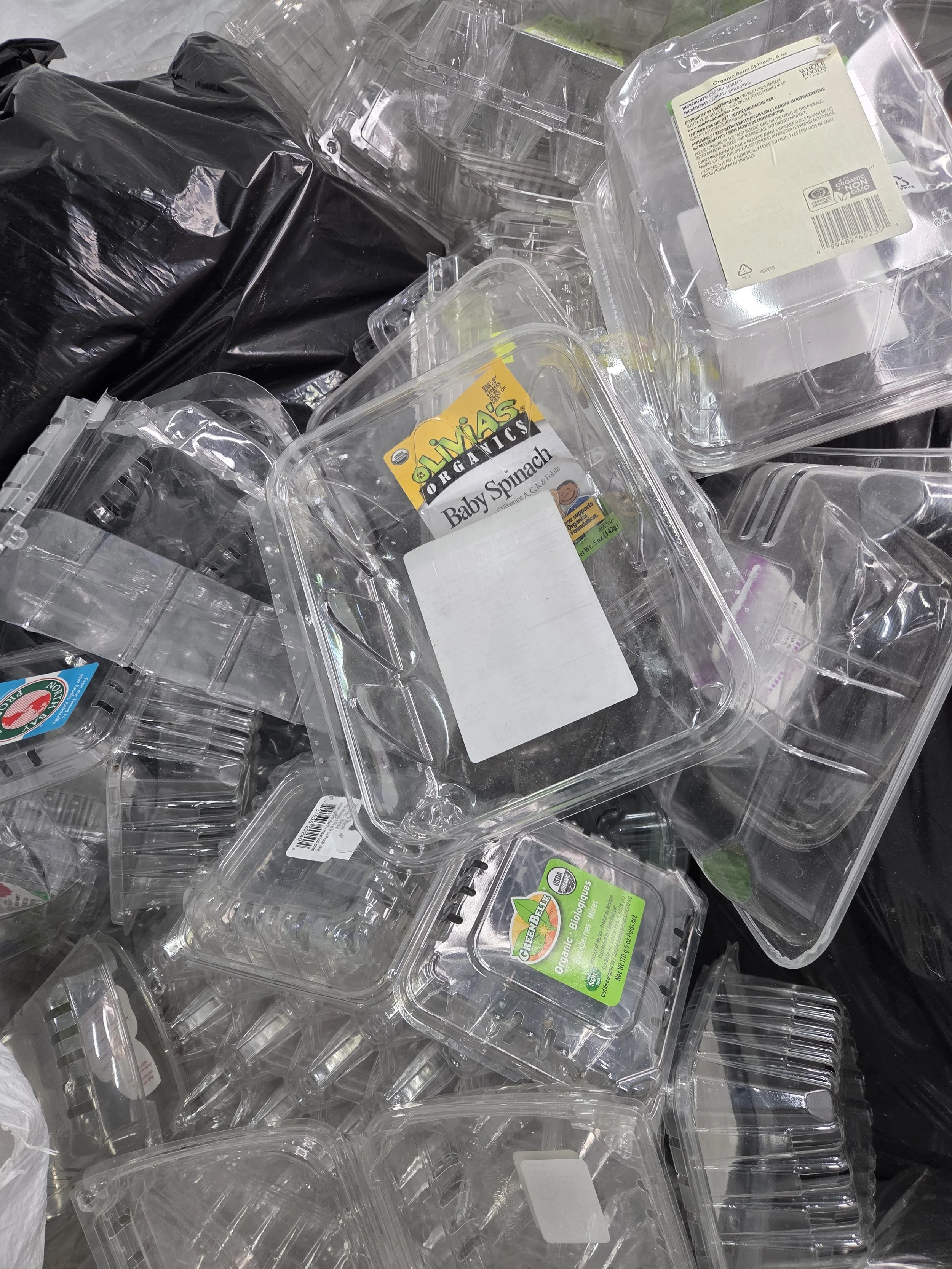
PET and Polystyrene recyclables can be visually identical. Their sound profiles are completely different.
The Plastic Buyer’s Perspective
The sorting problem goes beyond plastics, but for now let us consider the perspective of a plastic material buyer:
Recycling plastic only makes sense if the secondary-market product is valuable enough to offset the costs of separating incoming materials. A few stray contaminants in feedstock material will erase profits through damaging equipment, lowering recycled product quality, and undermining buyer trust. So, to do business, contaminants be removed or prevented by the recycler. Testing bales for purity is difficult (read: expensive and slow), and with current methods the testing costs alone can eclipse the value of materials delivered, so consistency and trust are key.
Current Options Fail Outside The Lab
Material characterization techniques tend to rely on specialized equipment, controlled conditions, and trained technicians. Samples must be prepared, transported, and queued for analysis rather than being checked in‑line. A few machine vision automations like OCR and rapid spectroscopy have been deployed successfully, but even these have clear physical limitations. Folded, crushed, and highly pigmented materials can confound advanced vision and optical systems. The urge to to test a few samples, lose some money, blame the supplier then move on is understandable. But of course there is a better way.
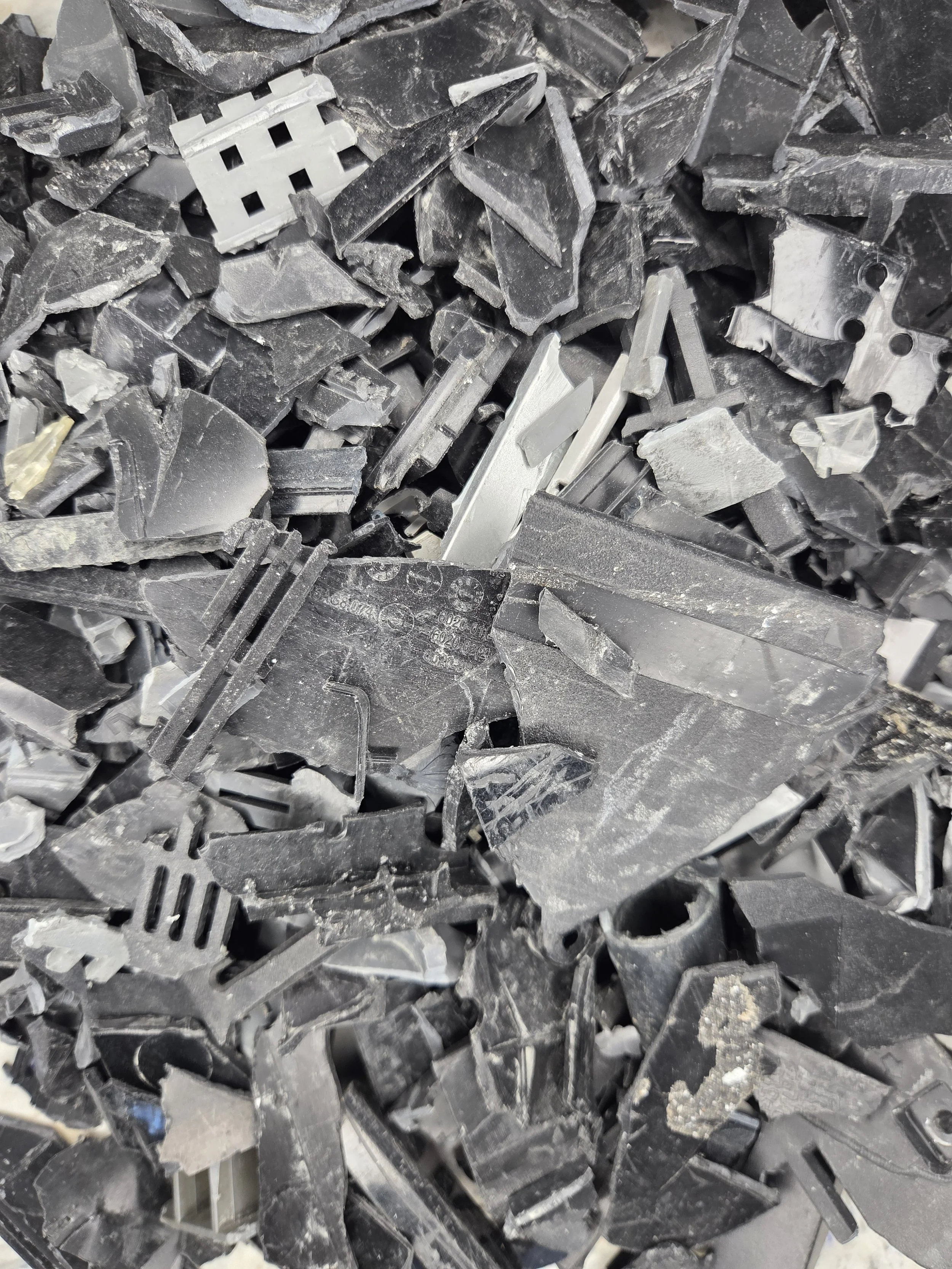
Engineering resins, like those that make up e-waste, are high-value materials… if they can be properly separated.
A Sound Plan
The Reclamation Factory has developed a technology to change this inefficient market dynamic and foment connections between recyclers and material buyers. We have categorized acoustic signatures inherent to each material. The signatures are captured by microphones as the mixed material moves by. No sample preparation, no chemical testing. Just good old fashioned listening.
We have trained the system to classify the recyclables at speed and with sensitivity to critical features like fill and crystallinity. This method is effective for part-forms like bottles, as well as shredded or crushed materials and nurdles. Our pilot projects sort all these and others with precision greater than the 93% benchmark often reported by plastic buyers.
Conclusions & Predictions
To address the tradeoff between testing costs and contamination risk we must affordably sort materials.
Current methods for sorting burden recyclers with contamination responsibility and stifle connections between recyclers and material buyers.
The upside of a healthy market for scrap is a more circular supply chain, less reliance on petroleum industries, and money to be made for both recyclers and re-compounders.
Acoustic classification is the inevitable trajectory for solutions to this important sorting problem.